Get Support
040-388-4597
-
 By: admin
 - 0 Comments
 By:
By: Brisbane’s roads are among the most demanding in Australia. Between the gridlocked corridors of the M1 and Gympie Road, the punishing gradients of Paddington and Red Hill, and the unrelenting subtropical heat, vehicles in this city age faster than almost anywhere else in the country. For many car owners, the tipping point arrives quietly a repair quote that exceeds the car’s market value, or a mechanic’s inspection that reveals systemic fatigue no single fix can resolve.
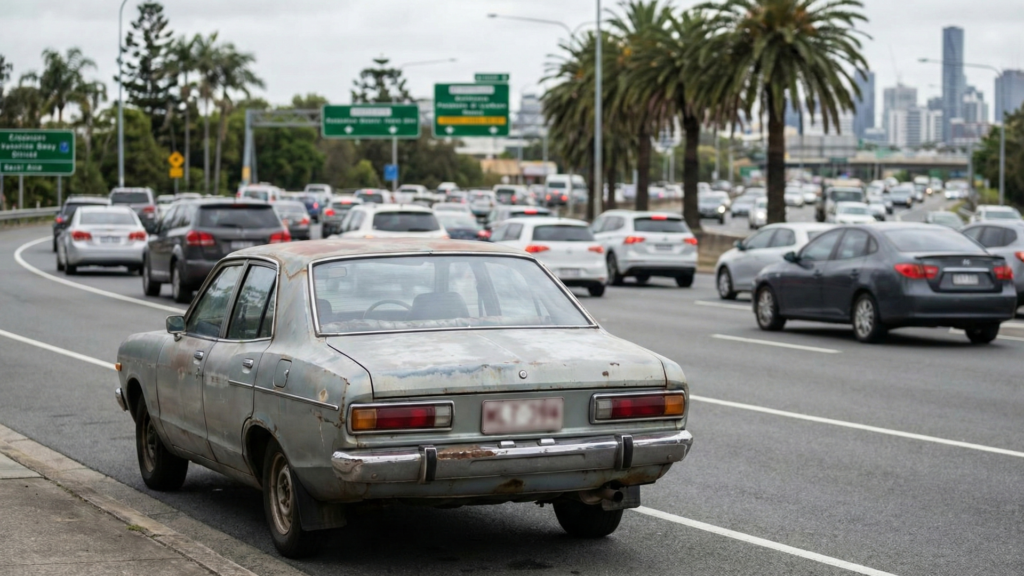
When that moment comes, most private sale avenues close. What opens instead is a direct path to professional car wreckers and knowing how Brisbane’s specific driving conditions affect your vehicle’s worth will ensure you get the best cash for cars outcome possible.
The Real Cost of Stop-Start City Driving
Highway driving is gentle on a vehicle. The engine reaches optimal operating temperature, airflow is consistent, and mechanical components work within their designed tolerances. Stop-start commuting in heavy urban traffic is the opposite in every respect.
When a car spends hours crawling through the Riverside Expressway or inching along the Pacific Motorway, heat accumulates beneath the bonnet with nowhere to escape. Cooling systems are constantly stressed, plastic hoses and rubber seals degrade ahead of schedule, and automatic transmissions cycle through thousands of unnecessary gear changes per trip. Over months and years, this produces a predictable pattern of mechanical failures unique to Brisbane vehicles.
Transmission wear is one of the first casualties. Constant shifting in congested traffic accelerates clutch plate and torque converter deterioration far beyond what manufacturers design for. A transmission that might last 200,000 km in regional driving can begin slipping before 120,000 km in Brisbane conditions. Cooling system damage follows closely extended idling in Queensland’s heat pushes coolant temperatures to the edge of safe operating ranges, causing radiators to crack and thermostats to fail prematurely. A single blown head gasket can render an otherwise functional vehicle uneconomical to repair. Brake system fatigue compounds the problem further. The relentless acceleration-and-braking cycle consumes rotors and pads at roughly twice the rate of highway use, and in older vehicles this wear frequently extends to calipers and brake lines.
What experienced car wreckers understand and what most car owners do not is that these mechanical failures do not erase a vehicle’s intrinsic value. The engine block, gearbox casing, chassis, and body components retain significant worth regardless of whether the car is driveable. Reputable providers of cash for cars in Brisbane assess this material value directly, offering payouts based on what the vehicle contains rather than what it can do.
Brisbane’s Hills and Heat: A Double Threat to Suspension
Few Australian cities combine steep residential terrain with subtropical climate the way Brisbane does. For suspension components, this pairing is particularly destructive.
A car driven daily through Toowong, Highgate Hill, or Bardon endures constant vertical loading that flat-city driving simply does not produce. Control arms, strut mounts, CV joints, and steering components absorb this stress over years until they fail often together. A comprehensive suspension overhaul on an older vehicle can easily reach $2,000 to $4,000 or more, a figure that frequently exceeds the car’s entire private sale value.
At this point, the private market effectively closes. No buyer seeking a roadworthy vehicle will take on a car requiring a full suspension rebuild. Car wreckers, however, operate on an entirely different valuation model. Because scrap metal pricing is determined by weight and material composition, a car with collapsed suspension is worth exactly the same in recyclable steel and aluminium as one with a perfect chassis. Worn suspension, cracked cooling systems, and failed transmissions are all normal outcomes of sustained Brisbane driving and none of them diminish the scrap value of your vehicle’s heavy structural components.
Why Professional Car Wreckers Pay Cash for Damaged Vehicles
The economic logic behind cash for cars services becomes clear once you understand the two categories of value every vehicle contains regardless of condition: salvageable parts and recyclable raw materials.
Even a vehicle with a seized engine typically presents car wreckers with significant opportunity. Body panels free from major dents, intact windscreens, functional headlights, undamaged interior trims, and electronic control modules all retain strong resale value as replacement parts for vehicles still on the road. This parts salvage business alone justifies a competitive offer on many cars that private buyers would dismiss outright.
Beyond parts, the raw material value of a vehicle is substantial. Steel which makes up the bulk of most passenger cars is priced by weight and in consistent demand. Aluminium components command an even higher return per kilogram. And catalytic converters, present on virtually all vehicles manufactured from the mid-1990s onwards, contain concentrated deposits of platinum, palladium, and rhodium precious metals that attract significant prices on the commodities market.
Together, these factors mean that a reputable car wreckers service in Brisbane can offer genuine, competitive cash for cars on vehicles exhausted by city driving with no requirement that the vehicle be roadworthy, registered, or even operational.
How to Maximise What You’re Paid
Understanding the value drivers within the car wrecking industry positions you to negotiate effectively and avoid leaving money on the table.
Vehicle weight matters significantly. Larger vehicles SUVs, four-wheel drives, vans, and full-size sedans contain more steel and aluminium by mass, directly increasing scrap value. If Brisbane traffic has worn out a larger vehicle, expect a stronger offer than you might anticipate. Catalytic converter status is equally important. Confirm whether your vehicle’s converter is intact before accepting any quote these components are disproportionately valuable relative to their size. Intact glass and undamaged panels also increase parts value considerably. If your car has mechanical issues but the exterior and interior remain in reasonable condition, make this clear during the valuation request.
Finally, get multiple quotes from licensed car wreckers. Reputable services provide transparent, obligation-free valuations, and comparing two or three offers from licensed operators ensures you receive fair market value rather than an opportunistic lowball figure.
The Right Time to Act
Once a vehicle has reached the point where repair costs consistently outpace its value, its condition will continue to deteriorate particularly in Brisbane’s climate, where heat and humidity accelerate rust and degrade rubber components. A car left sitting in a driveway loses value progressively; a car exchanged promptly for cash for cars retains maximum value.
The process through a professional car wreckers service is simple: provide vehicle details, receive an obligation-free quote, confirm a collection time, and receive cash on the spot. No roadworthy inspection, no private sale advertising, no protracted negotiation with buyers seeking discounts for every imperfection.
Conclusion
Brisbane’s driving environment is uniquely harsh. The combination of dense stop-start traffic, steep residential terrain, and sustained subtropical heat creates wear patterns that outpace maintenance schedules and can render even well-managed vehicles uneconomical to keep on the road.
When your car reaches that point, car wreckers represent the most efficient and financially sensible exit available. Rather than investing further in a vehicle the private market no longer wants, a licensed cash for cars service converts your worn-out asset into immediate, guaranteed payment assessed on its genuine worth in steel, aluminium, parts, and precious metals.
Contact a trusted car wreckers service in Brisbane today for an obligation-free valuation. Turn a traffic-worn liability into instant cash, free up your driveway, and redirect that money toward something that will actually get you where you’re going.
