Get Support
040-388-4597
-
 By: admin
 - 0 Comments
 By:
By: Brisbane’s storm seasons are a fixture of life in South East Queensland. The region’s subtropical climate delivers long stretches of clear skies, but when severe weather arrives it moves fast. Flash flooding in low-lying areas like Rocklea, Oxley, and Ipswich can submerge parked vehicles within hours. Across the wider region from Toowoomba’s ranges to the coastal suburbs of Redcliffe rising water levels routinely catch vehicle owners with no time to respond.
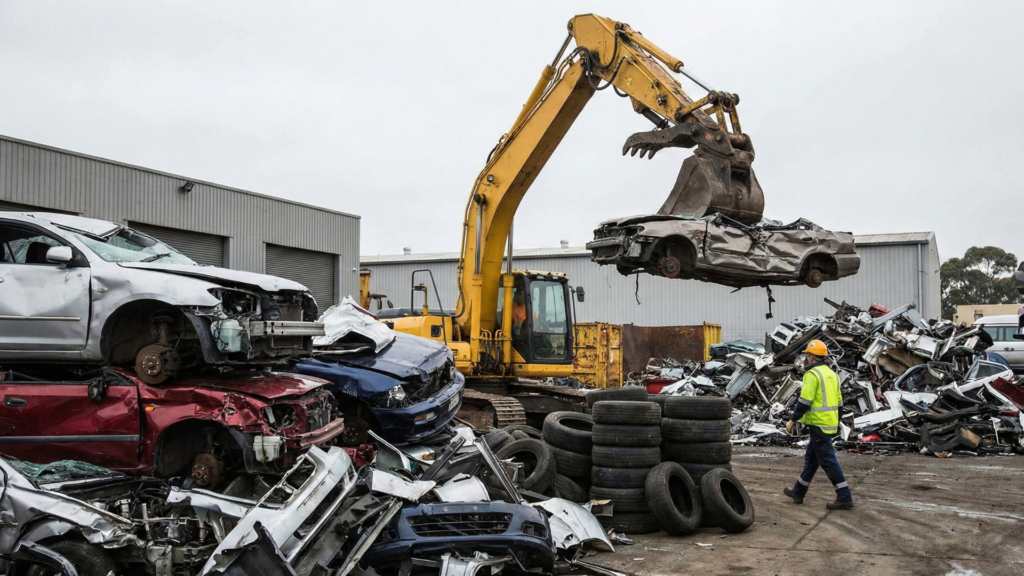
The aftermath leaves thousands of car owners facing the same difficult calculation: invest heavily in repairing a waterlogged vehicle, or cut losses and move on. Increasingly, the answer is the latter and it is driving a measurable boom in flood-damaged vehicle entries across Brisbane’s scrap market. For professional car wreckers, this shift represents a significant and growing segment of daily operations. For vehicle owners, understanding what their flood-damaged car is still worth is the difference between a financial setback and a manageable exit.
Why Flood Damage Is Rarely Worth Repairing
The instinct to repair a flood-damaged vehicle is understandable. If the exterior looks intact and the engine turns over, the damage can seem superficial. In reality, water ingress is one of the most comprehensively destructive events a modern vehicle can experience and its full effects are frequently delayed by weeks.
When water breaches a vehicle’s cabin, it immediately attacks the dense network of electronics located beneath the seats, behind the dashboard, and throughout the floor cavity. Modern vehicles contain dozens of control modules, sensors, and wiring looms that were never designed to tolerate immersion. In the days and weeks following a flood event, owners across affected suburbs begin experiencing the consequences:
- Electrical system failure — Short circuits and corrosion in body control modules cause unpredictable faults across lighting, windows, and central locking systems.
- Airbag sensor malfunction — Corroded impact sensors trigger fault codes that disable the SRS system entirely, creating a critical safety and compliance issue.
- Engine control unit errors — Water-damaged ECUs produce faults that no scan tool can reliably resolve, as the underlying hardware is compromised rather than the software.
- Mould and contamination — Floodwater containing sewage or agricultural runoff saturates carpets and insulation with contaminants that are near-impossible to fully remediate.
- Hidden corrosion — Salt and mineral deposits left behind by receding water accelerate rust in structural cavities and floor pans, often invisibly, for months.
When repair costs approach or exceed a vehicle’s pre-flood market value or when contaminated floodwater is involved insurers typically declare a statutory total loss. At that point, private sale and trade-in options close entirely. Selling to car wreckers for cash for cars becomes the most financially viable exit available.
What Flood-Damaged Cars Are Still Worth
The financial case for selling a flood-damaged vehicle to car wreckers rests on a clear reality: water destroys electronics and mechanical systems, but it leaves many of the most valuable physical components entirely intact.
A vehicle submerged in a Brisbane flash flood typically emerges with straight, undamaged body panels, uncracked glass assemblies, serviceable alloy wheels, and structural components that retain full recyclable value. Car wreckers harvest these parts and resell them as quality secondhand replacements for vehicles of the same make and model still on the road. This parts salvage business directly supports the cash for cars offer made to the original owner.
What retains strong value after flood damage:
- Body panels, doors, and bonnets — Straight, undamaged panels are among the most in-demand secondhand parts in any wrecking yard.
- Windscreens and door glass — Glass assemblies are entirely unaffected by water and resell at strong margins.
- Alloy wheels — Flood water does not damage wheels and these are consistently high-demand items.
- Catalytic converters — Containing platinum, palladium, and rhodium, these precious metal components are completely unaffected by flood history and represent a significant component of any scrap valuation.
- Steel and aluminium mass — The chassis, body shell, and drivetrain components are assessed purely by weight. A flood write-off contains exactly as much recyclable steel as a mechanically sound vehicle.
This combination of parts salvage value and raw material weight means flood-damaged vehicles consistently attract stronger cash for cars offers than most owners expect particularly for larger vehicles like SUVs, utes, and vans.
The Scale of Post-Storm Write-Offs Across South East Queensland
When a significant weather event moves through South East Queensland, the resulting wave of insurance write-offs does not concentrate in one area. It spreads simultaneously across the outer western suburbs, the Ipswich corridor, the Lockyer Valley farming communities of Gatton, and into coastal suburbs stretching from Redcliffe to the northern Gold Coast.
Several realities shape how this affects cash for cars outcomes:
- Write-offs arrive in volume, sometimes in the thousands, within 48 hours of a single event stretching repairer and assessor capacity across the entire region simultaneously.
- A statutory write-off is recorded on the PPSR, meaning private buyers and dealers cannot legally register the vehicle. Licensed car wreckers are effectively the only legitimate buyer.
- Early action matters. Reputable car wreckers maintain consistent pricing tied to scrap metal markets, but the vehicle’s condition deteriorates with delay. Additional wet weather accelerates rust and reduces the parts salvage value that contributes to a stronger overall offer.
- Larger vehicles earn more. SUVs, utes, vans, and four-wheel drives contain significantly more steel and aluminium by mass, directly increasing the base scrap component of any cash for cars offer.
Clearance, Collection, and Community Recovery
Beyond the individual financial decision, there is a broader community dimension to flood vehicle clearance that is easy to overlook. Non-operational vehicles left on streets and driveways in flood-affected suburbs like Durack, Inala, Carole Park, and Forest Lake create tangible obstacles to recovery. They block access ways, impede cleanup crews, and present environmental risks from leaking fluids mixing with storm runoff.
Professional car wreckers operating removal services play a practical role in post-flood recovery. Established operators maintain the heavy-duty equipment required to extract non-running vehicles from challenging positions waterlogged front yards, sunken basement car parks, and streets made difficult to access by storm debris.
What to expect from a reputable Brisbane car wreckers collection service:
- Free removal — No towing fee is charged to the seller under any circumstances.
- Same-day or next-day pickup — Available across Brisbane and the broader South East Queensland region.
- Cash on collection — Your cash for cars payment is made on the spot when the vehicle is picked up, not via bank transfer days later.
- Full paperwork handled — The wrecker manages all deregistration and title transfer obligations from the point of collection onward.
- No roadworthy required — Non-running, unregistered, and flood write-off vehicles are all accepted without compliance documentation.
How to Sell Your Flood-Damaged Car to Brisbane Car Wreckers
The process is straightforward and typically completed within 24 hours:
- Gather your vehicle details — Make, model, year, VIN, and a clear description of the flood damage and current condition of exterior panels, glass, and wheels.
- Contact licensed car wreckers — Call or submit an online enquiry to two or three licensed Brisbane car wreckers and request obligation-free quotes.
- Compare cash for cars offers — Review each valuation and confirm it reflects both scrap metal weight and any parts salvage premium. Choose the strongest offer from a licensed operator.
- Confirm free collection — Arrange a pickup time. Reputable car wreckers collect at no cost to you, across Brisbane and South East Queensland.
- Receive cash on collection — Hand over the keys and receive your cash for cars payment on the spot. All paperwork is handled from this point forward.
How to Choose the Right Car Wreckers After a Flood
The post-flood period is not the time to navigate a predatory offer. When selecting car wreckers to handle a flood-damaged vehicle, verify the following before agreeing to anything:
- Queensland motor dealer licence — Ask for the licence number if it is not clearly advertised.
- Written quote before collection — Any reputable service provides a written offer before a collection time is confirmed. Verbal-only quotes are a red flag.
- No last-minute price revision — Established car wreckers do not reduce their cash for cars offer on collection day unless the vehicle’s condition differs materially from what was described.
- Full paperwork included — Deregistration, transfer of ownership, and compliance documentation should be managed entirely by the wrecker at no additional charge.
- Transparent valuation breakdown — A trustworthy service will explain the scrap weight component and any parts salvage premium applied to your specific vehicle.
Conclusion
Flood damage is one of the few vehicle events where repair is almost never the right financial decision. The combination of irreversible electronic damage, insurance write-off status, and the prohibitive cost of restoring a contaminated interior means that even vehicles appearing superficially intact are, in practical terms, beyond economic repair.
What they are not is worthless. For professional car wreckers in Brisbane, a flood-damaged vehicle represents a reliable source of quality salvageable parts and recyclable raw materials and that value translates directly into a genuine cash for cars payment for the owner.
If a storm or flood event has left you with a written-off vehicle anywhere across South East Queensland, contact a licensed car wreckers service today. Receive an obligation-free valuation, arrange a no-cost collection, and convert a difficult situation into a clean financial outcome.
